Affiliate disclosure: As an Amazon Associate, Soccer Training Net earns from qualifying purchases. All five Amazon product links on this page are affiliate links; manufacturer reference links are not.
The original version of this guide explained three broad categories—pop-up rebounders, target nets, and adjustable-angle trainers—but did not identify actual products. That made it difficult to compare size, design, and intended use. This revised guide names five current models and assigns each one a specific training role.
There is no single best net for every player. A forward practicing shot placement needs something different from a midfielder working on first touch or a coach building a goalkeeper station. Start with the skill, then choose the net.
Quick comparison
| Training net | Best for | Notable design |
|---|---|---|
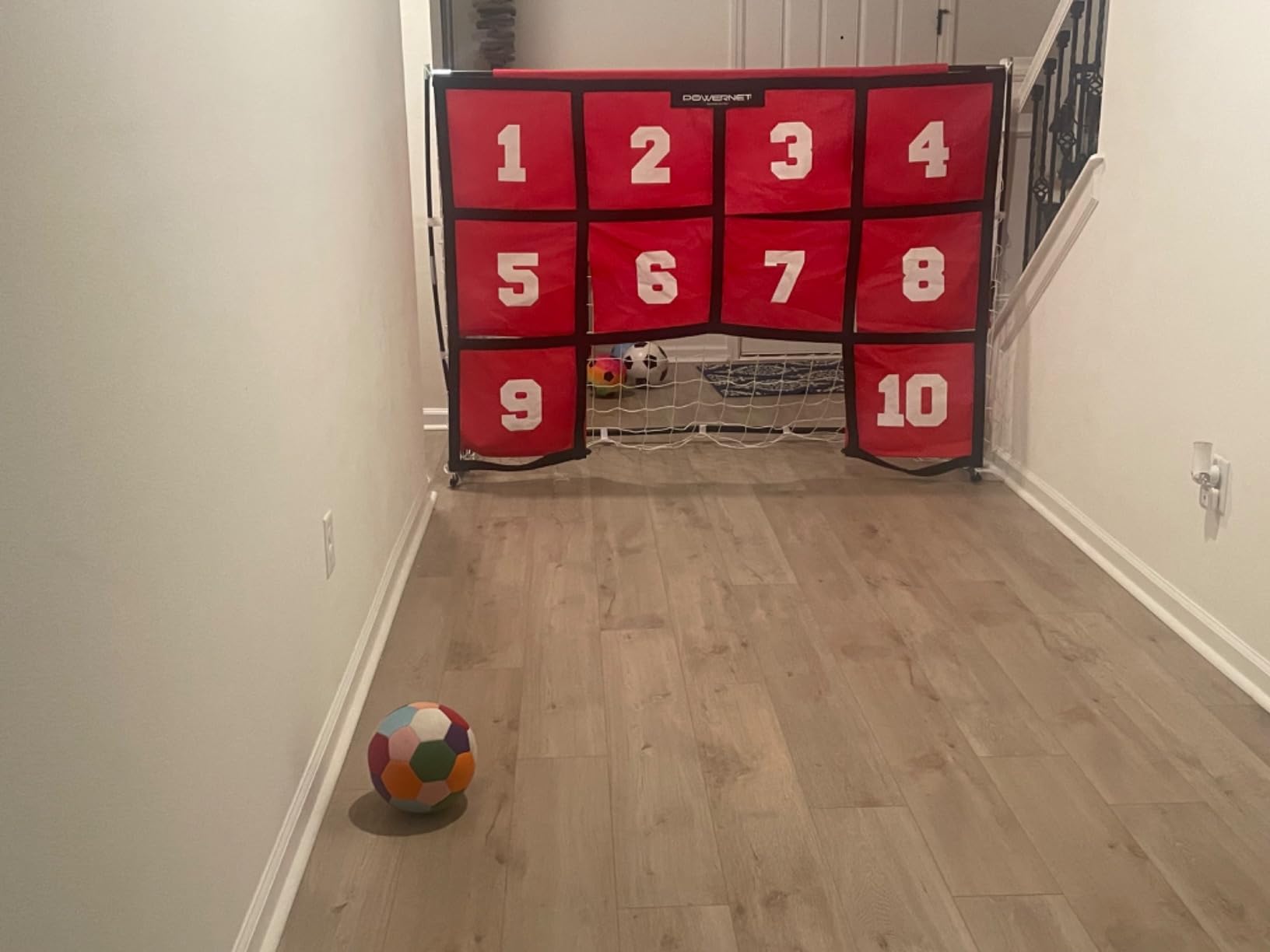
| PowerNet Numbered Target Soccer Goal | Shooting accuracy | 6×4 goal with ten numbered targets |
| SKLZ Quickster Soccer Trainer | Passing and first touch | Ground and aerial return surfaces |
| FORZA RapidFire Flash Pop-Up Rebounder | Portable rebound work | Pop-up format; 8×5 option |
| Kwik Goal CFR-2 Rebounder | Adjustable-angle training | 39×59-inch adjustable rebound surface |
| Franklin Heavy Duty Steel Soccer Rebounder | Large backyard or team station | 12×6-foot double-sided rebounder |
1. PowerNet Numbered Target Soccer Goal
Best for shooting accuracy. PowerNet’s 6×4-foot target goal uses ten numbered zones, each approximately 14×15 inches. A player can call a number before shooting, assign points to difficult zones, or record correct-target hits over a fixed number of attempts.
This is the most direct choice in the group for finishing and placement drills. The catch net can reduce ball retrieval, but the numbered targets provide the real value. Because it is smaller than a regulation goal, it is better viewed as a precision-training station than as a complete simulation of match shooting angles.
Read our full PowerNet review or view the current Amazon listing.
2. SKLZ Quickster Soccer Trainer
Best for passing, receiving, and first touch. SKLZ describes the Quickster Soccer Trainer as a tool for ground and aerial work. Its separate surfaces let players rehearse passes, receive returning balls, and settle balls arriving at different heights.
This model makes more sense than a target goal when the main objective is repeated touches rather than finishing. The return can vary with the strike, surface, net tension, and setup.
View the SKLZ Quickster on Amazon ↗ · Manufacturer specifications ↗
3. FORZA RapidFire Flash Pop-Up Soccer Rebounder
Best for a portable pop-up rebound station. FORZA’s RapidFire Flash line is designed around quick setup and rebound training. The manufacturer lists uses including ball control, reaction speed, catching, and accuracy work, with an 8×5-foot model available.
A pop-up design is attractive for families or coaches who regularly move equipment. Buyers should compare anchoring, folded size, rebound tension, and storage needs with more rigid steel-frame models.
View the FORZA RapidFire Flash on Amazon ↗ · Manufacturer specifications ↗
4. Kwik Goal CFR-2 Rebounder
Best for changing the return angle. The CFR-2 has a 39×59-inch adjustable-angle rebound surface with an outlined center target. Changing the angle can vary ground returns, lifted returns, receiving drills, and reaction exercises without rebuilding the station.
Its training surface is smaller than the large nets in this guide, so it prioritizes a defined return area and adjustability over goal-like size.
View the Kwik Goal CFR-2 on Amazon ↗ · Manufacturer specifications ↗
5. Franklin Heavy Duty Steel Soccer Rebounder
Best for a larger backyard or team practice station. Franklin lists this steel rebounder at 12×6 feet and describes it as double-sided, with ground stakes included. The larger surface can suit player rotations through passing, receiving, and shooting exercises.
Its size also requires more practice and storage space than a compact trainer. Measure the intended area and confirm that the anchoring method is appropriate for the surface.
View the Franklin rebounder on Amazon ↗ · Manufacturer specifications ↗
How to choose the right soccer training net
Choose the skill before the product
For shot placement, choose visible targets. For passing and first touch, prioritize a useful rebound. For volleys and changing return paths, look for multiple surfaces or adjustable angles. For goalkeeper stations and group practice, a larger surface may be more useful.
Measure practice and storage spaces
Check the assembled dimensions, safe shooting distance, space behind the net, folded dimensions, and vehicle or storage requirements. “Portable” does not always mean small enough for every trunk or closet.
Review anchoring and surface compatibility
Ground stakes are useful on suitable grass surfaces but not on indoor turf or concrete. Follow the manufacturer’s instructions and use an anchoring or weighting method designed for both the product and surface.
Consider replacement parts
Nets, bungees, poles, and frames wear differently. Before buying, check whether replacement netting or hardware is available and read the current warranty and return terms.
Final recommendations
Choose the PowerNet Numbered Target Soccer Goal when accurate finishing is the priority. Choose the SKLZ Quickster Soccer Trainer for passing and first-touch repetitions, the FORZA RapidFire Flash for pop-up portability, the Kwik Goal CFR-2 for adjustable-angle returns, or the Franklin 12×6 Steel Rebounder when a larger practice surface matters most.
The best purchase is the net that matches the drills a player will perform consistently—not necessarily the largest, most expensive, or most complicated model.